

In the UK, at least 15 million people have a Long-Term Health Condition (LTC) and 30 per cent experience anxiety and/or depression.
Long-term health condition patients typically receive unconnected treatment from physical and mental health services or no psychological support. Co-morbid mental health disorders in long-term health conditions result in poorer clinical outcomes from existing therapies and a 45 per cent increase in healthcare costs. Working with collaborators at King’s Health Partners who have specialist expertise in Mind and Body, Maudsley BRC researchers developed a web-based digital therapy – COMPASS – to fill this critical gap that has now evolved into a commercialised app – Orbi.
Impact summary
- Collaborating with a range of charities to recruit into a clinical trial and demonstrating that the web-based digital therapy COMPASS improved anxiety and depression amongst people with long-term health conditions.
- Partnering with industry to translate the web-based therapy into an app to make it accessible to those who need it and scalable
- Adopting a platform approach that focusses on shared symptoms, enabling digital therapy support to adapt to different conditions and work with an individual’s cluster of symptoms
- Partnering with health economists to demonstrate the economic value of the digital therapy and potential to scale.
Treating mental and physical health together
COMPASS provides online psychological treatment for people experiencing related anxiety and depression (distress) related to long term health conditions. Patients access support when convenient to them with minimal remote support from a therapist.
Unlike other digital cognitive behavioural therapies for anxiety and depression, COMPASS has the long-term health condition at the heart of the programme, and treats mental and physical health together. Eleven online modules address these-specific psychological challenges for long-term health conditions such as managing illness related uncertainty and coping with symptoms.
COMPASS is based on a model developed by the team, underpinned by research evidence on specific psychological and social mechanisms contributing to distress in long-term health conditions. These processes are targeted using pre-programmed, tailored interactive techniques. Extensive stakeholder engagement (patients, healthcare professionals) continues to inform improvements for usability and acceptability.
Patient Testimonial: Penny’s Story
Penny is one of the patient representatives who has worked through COMPASS. She shares her story in this video.
Digital therapies theme working with charity partnerhs
COMPASS has been implemented in Improving Access to Psychological Therapies (IAPT) service and KHP acute services. Findings show that patients’ depression, anxiety and daily functioning significantly improved (Figure 1, below). Patients liked the tailored content, online flexibility, and therapist support.
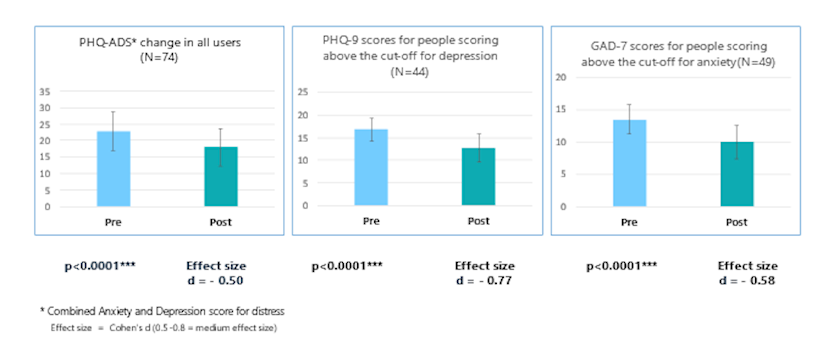
Figure 1. Real world data from NHS implementation feasibility study.
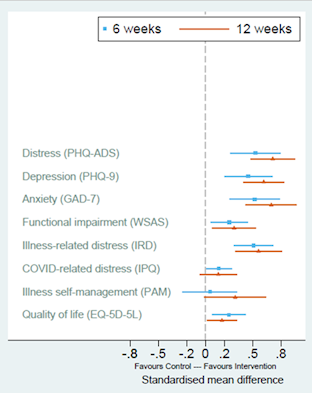
Figure 2: Treatment effects for COMPASS versus control (Standard Charity Support) on primary (PHQ_ADS) and secondary outcomes.
The Digital Therapies Theme became part of the NIHR BRC: Maudsley in 2022 and the support provided by the BRC has been vital in supporting researchers and clinicians, helping them to build and foster charity and industry partnerships. Partnering with several charities (Crohn’s & Colitis, MS Society, Shift.ms, Kidney Care UK and Psoriasis Association), BRC researchers demonstrated the therapy’s effectiveness in a range of long-term conditions.
194 patients were recruited and overall 89 per cent of participants who received COMPASS with therapist support showed a clinically significant improvement in distress, compared to 45 per cent of those who did not have access to the programme.
Alongside improvements in anxiety and depression, COMPASS was also associated with improved ability to undertake daily activities, reduction in illness-specific distress, and better quality of life.
“As a person with Multiple Sclerosis, my life had changed significantly as a direct result of my diagnosis. Due to thankfully being part of the COMPASS trial, I feel empowered and confident to deal with changes and emotions that life throws at you as a person with a long-term condition. COMPASS directs you to areas of your life you’d like to improve and explore by enabling skills, providing supported tools to guide you with along your journey. I highly recommend to those in the MS community as a best practice.”
Simon Brodie, study participant
Health economic analyses on the RCT data and preliminary analysis indicate COMPASS is a cost-effective intervention according to NICE metrics.
Working with industry to move into an app
Digital therapies offer an accessible and scalable approach to support patients with LTCs, empowering them to look after both their physical and mental health. Working with industry partner – Avegen – BRC researchers have commercialised the therapy into an app – Orbi – a bespoke intervention for managing mood in the context of a LTC to be deployed at scale.
This is a platform model that can serve multiple long term health conditions and tailors its support to an individual’s symptoms, placing their needs and experience at the centre of its support rather than being restricted to diagnosis.
BRC funding has enabled researchers to create specific PPIE infrastructure and knowledge around digital therapies which has been used for Orbi and other digital therapies in the NIHR BRC: Maudsley Digital Therapies stable.
The Orbi app gives access to a range of features including:
- A knowledge base that tackles topics relating to the challenges people experience living with LTCs (e.g. managing uncertainty and accessing social support).
- Personalised content based on the user’s needs.
- Symptom tracking which allows users to see patterns between health factors.
- Setting and managing health goals.
- Patient-reported outcomes.
Looking to the future
Orbi is being tested using a therapist unsupported version in a feasibility study at King’s and, working with Avegen, the BRC team will be part of a series of events and dissemination strategies to increase awareness and enable engagement.
Together with Avegen the team plan to assess the best approach to provide a human touchpoint to ensure engagement with Orbi whilst still being able to scale. Insights from the pilot and evaluation of engagement approach will help the teamwork with Avegen to ensure that Orbi produces a feasible app that can be tailored to individual’s specific physical and mental health needs. Orbi is the first of several other digital therapies that the BRC has in its the pipeline and the plan is to launch these with their industry partner, meeting the expectations outlined in the NHS 10-year plan, which aims to shift care provision “From analogue to digital: placing care in your hands.”