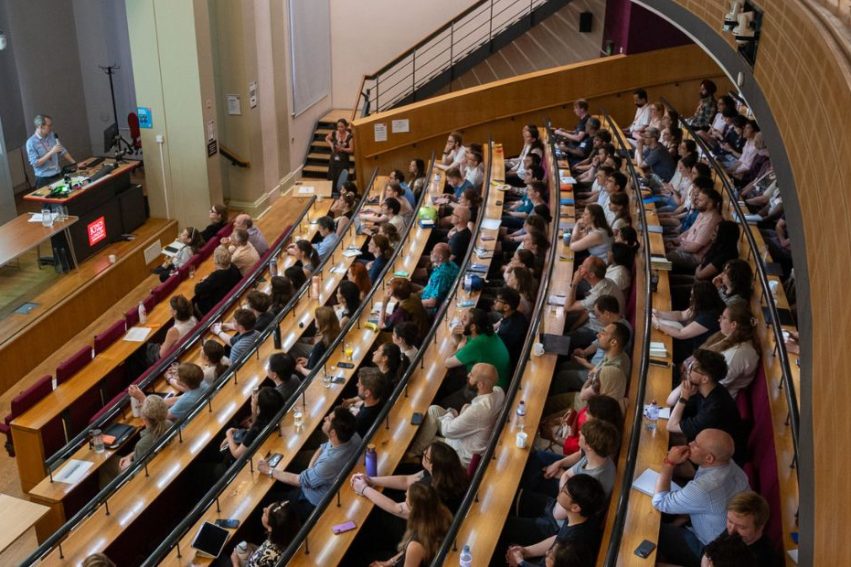


Researchers, clinicians, industry representatives and people with lived experience came together in Brighton in June for the Healthcare Text Analytics Conference, a conference dedicated to one big question – how can we use the information already sitting in patient health records to improve care?
King’s College London and NIHR Biomedical Research Centre: Maudsley (BRC) researchers were involved as organisers, chairing sessions and panels, presenting research, and also received several awards.
This year’s theme was “Human Centered AI & NLP: Bridging Research and Real World Practice“. Much of the information that matters most about a patient’s health is written down in free text, such as doctors’ notes, discharge letters and care plans. This kind of information is rich but hard to search through, because it isn’t organised into neat boxes the way a date of birth or a blood test result is. The conference brought together people working on ways to make sense of this written information safely, fairly, and in ways that genuinely help patients.
Pre-conference workshops
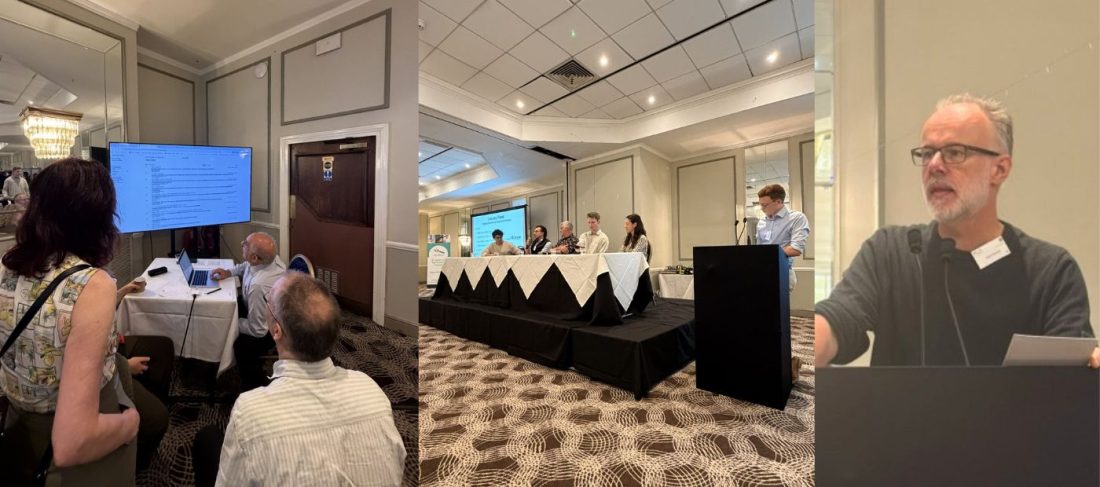
The day before the main conference, two pre-conference workshops brought together over 80 researchers, clinicians, data scientists, and people with lived experience to dig into some important questions around health text data research.
Workshop 1: Free-text healthcare data and Trusted Research Environments (TREs)
It opened with an introduction from Michelle Amugi, Programme Manager at DARE UK, covering the work of Health Data Research UK and DARE UK in building the infrastructure needed to support secure, large-scale use of patient data.
Presentations followed from three projects working on how to make sensitive free-text data — the kind of written information found in clinical notes and care records — available for research while keeping it safe:
- STAR-TRE looked at how to assess the risks involved in accessing sensitive free-text data within secure research environments.
- FORTRESS explored how to generate realistic but entirely synthetic versions of free-text records, so researchers can work with data that looks like the real thing without touching any actual patient information.
- TRExt focused on how to unlock richer insights from written clinical records within secure research settings.
Dr Jaya Chaturvedi, Research Fellow in Natural Language Processing at King’s, chaired a session, and co-facilitated the afternoon discussion with Professor Goran Nenadic, University of Manchester, which shifted from presentations to active collaboration around the SAFETEXT Working Group‘s draft protocol. This protocol, shaped through earlier workshops with public contributors, industry representatives, and researchers, was shared for wider sense-checking and feedback. Discussions covered approaches to removing identifying details from written records, ways of generating safe synthetic versions of text data, and how to agree on next steps across the group.
Workshop 2: From patient narratives to insights: applying text analytics to scalable lived experience data for new discoveries
The second workshop, led by Dr Saskia Sanderson, Senior Research Fellow at King’s, tackled a different but equally important question – how do we make real use of what patients tell us, in their own words, at scale?
The session brought together data scientists, qualitative researchers, clinicians, behavioural scientists, and people with lived experience, reflecting a recognition that this is not a problem any one discipline can solve alone. The discussions explored how patient-reported text can be used meaningfully and responsibly in research, and how to do so in a way that genuinely respects context, meaning, and trust.
Ten years on: what’s changed, and what hasn’t
The conference itself opened with a welcome from Professor Angus Roberts, Professor of Health Informatics at King’s, alongside co-chair Dr Elizabeth Ford, Brighton and Sussex Medical School, followed by a reflective opening address from Professor Goran Nenadic, University of Manchester, marking a decade of the Healtex community.
A lot has changed in that time. The tools available to researchers are far more powerful than they were a decade ago. But some of the basic challenges haven’t gone away: how do we make sure these tools are safe, fair, and actually useful for patients and clinicians? This question set the tone for the whole conference.
The universal challenges of electronic health records
The first keynote talk, by Dr Martin Krallinger from the Barcelona Supercomputing Center, explored the challenges of working with health records written in Spanish.
Many of the same problems researchers face with English language health records, such as inconsistent record-keeping and very different styles of writing between departments, also show up in other languages, with extra complications when patients’ records mix two languages together.
Mental health and social determinants of health
One of the sessions focused on how writing in patient records can reveal important information about someone’s wider life circumstances, things that can have a big impact on their health and recovery, but which aren’t always captured in a structured way.
Dr David Chandran and Jyoti Sanyal, from the CRIS ( Clinical Record Interactive Search) team, presented work that used computer models to spot when someone had recently lost their job, from reading the free text in their care records. Losing a job can be a major life event that affects someone’s mental health, but it isn’t something that’s routinely recorded as a tick-box. Being able to identify this automatically could help services better understand what’s going on in a patient’s life and respond more appropriately.
Narrative analysis and information extraction
A session chaired by Dr Jaya Chaturvedi, focused on what we can learn from the way patients and clinicians describe things in their own words.
Dr Tao Wang, Research Fellow at King’s, presented work on identifying how severe someone’s depression might be, by combining information from both the words people use and how they speak. This kind of work could eventually support clinicians in spotting when someone’s mental health is deteriorating, using information that’s already being recorded.
Engineering, resources and governance
A second session, also chaired by Dr Jaya Chaturvedi, looked at the practical and ethical groundwork needed before any of this research can happen, making sure data from different hospitals can be compared fairly, and making sure sensitive information is properly protected.
Dr Adam Sutton, Research Fellow at King’s, gave a short talk on a tool that helps convert data from one hospital’s record-keeping format into a shared, standard format, making it easier for researchers in different places to work together and compare results.
Making sure research actually helps patients
Several panel discussions throughout the conference focused on a theme that mattered to everyone in the room: how do we make sure all this research actually leads to real improvements for patients, rather than staying in academic papers?
A panel was chaired by Professor Rob Stewart, Deputy Lead of Informatics at the NIHR BRC: Maudsley, and included Matthew Broadbent, Clinical Informatics Lead for CRIS, along with colleagues from Cambridge, Sheffield and Edinburgh. They discussed what it really takes to introduce AI tools into NHS services. Their experience was that having a human double-check AI output isn’t just a box-ticking exercise, it genuinely helps clinicians think more carefully about a patient’s care. They also stressed that introducing new AI tools needs proper funding, support for staff, and careful planning around how it fits into existing ways of working, and that involving information governance teams early, as partners rather than gatekeepers, makes everything run more smoothly.
Posters and demonstrations
Alongside the talks, researchers showcased their work through posters and live demonstrations, with plenty of discussion throughout the breaks.
King’s College London researchers presented a strong set of posters spanning a wide range of topics:
- Dr Leo Zhang looked at using AI to predict outcomes for patients with Barrett’s oesophagus, a condition affecting the food pipe that can in some cases progress to cancer.
- Dr Yamiko Msosa presented work on using health records to identify important factors affecting a patient’s mental, physical, and social wellbeing.
- Dr Linglong Qian showcased the TIMELY-Agent project, developing new ways to test how well AI systems can reason through complex clinical scenarios.
- Shubham Agarwal presented research investigating whether mental health clinical notes reflect unconscious bias in the way different groups of patients are written about.
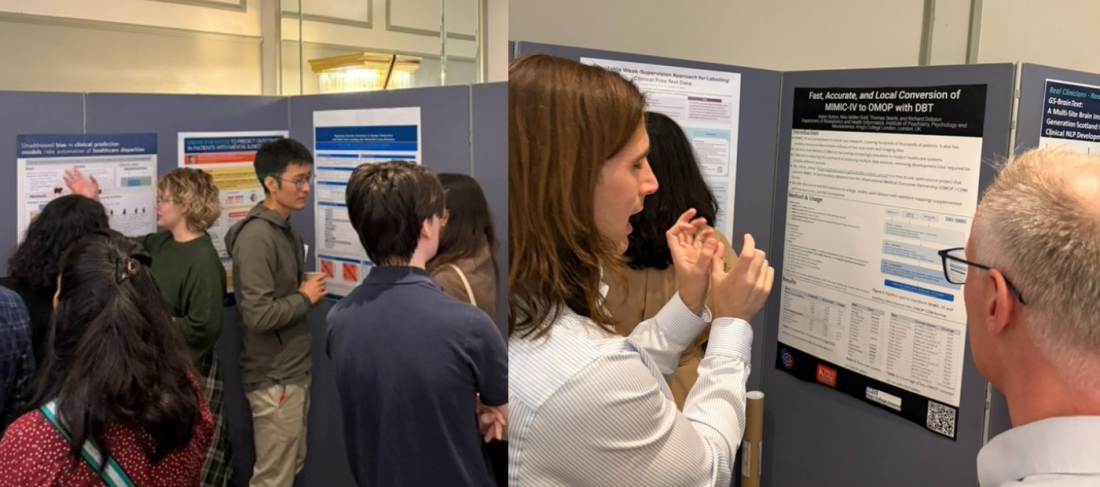
Poster session underway
Does AI understand what we mean?
The second keynote talk, from Professor Aline Villavicencio, University of Exeter, looked at how AI systems often struggle with figures of speech, idioms, and the kind of nuanced language people use every day, especially when talking about their mental health.
This matters because if an AI system misunderstands what someone means, particularly around something as sensitive as mental health, it could lead to the wrong conclusions being drawn about that person’s wellbeing. The talk was a useful reminder that language is rarely as straightforward as it first appears.
Awards
The conference closed by recognising some of the best work presented over the three days. King’s Dr Tao Wang received the People’s Choice Award, and Dr Linglong Qian won the Best Poster Award in the PhD and Fellowship category. Ms Zitong Li, an MSc student of the Applied Statistical Modeling and Health Informatics MSc program won the Best Poster Award.
Jaya Chaturvedi Research Fellow in Natural Language Processing, Biostatistics & Health Informatics"HealTAC 2026 was a reminder that improving how we use patient health records isn't just a technical challenge, it's about people - the patients whose information is being used, the clinicians who rely on accurate records to do their jobs, and the researchers working to make sense of it all safely and fairly.”
The organisers would like to thank:
- conference chairs Professor Angus Roberts and Dr Elizabeth Ford
- Niks Kolosnicins and Jane Taylor and the organising committee for the conference
- the sponsors, to DARE UK, NIHR BRC: Maudsley, Health Data Research UK, SAFETEXT Working Group, King’s College London, Brighton and Sussex Medical School, CogStack, and Frontiers.
- our patient and public contributors
- Dr Sarah Markham, a member of the Maudsley BRC Service User Advisory Group, who contributed to the organisation of the SAFETEXT workshop and participated in the SAFETEXT panel.