Researchers from the Institute of Psychiatry, Psychology and Neuroscience and NIHR Maudsley BRC will form part of three teams that have each been awarded a £100,000 Discovery Award as part of the Longitude Prize on ALS.
The Longitude Prize on ALS is a £7.5 million international programme to incentivise the use of AI-based approaches to transform drug discovery for the treatment of amyotrophic lateral sclerosis (ALS).
The prize is principally funded by the MND Association and designed and delivered by Challenge Works, home of the Longitude Prize. Additional funders include Nesta, the Alan Davidson Foundation, My Name’5 Doddie Foundation, LifeArc, FightMND, The 10,000 Brains Project, Answer ALS and The Packard Center at Johns Hopkins.
Discovery Awards were awarded to teams based on their potential to use AI to identify and validate drug targets. Identifying drug targets will drive understanding of the disease and support future drug discovery.
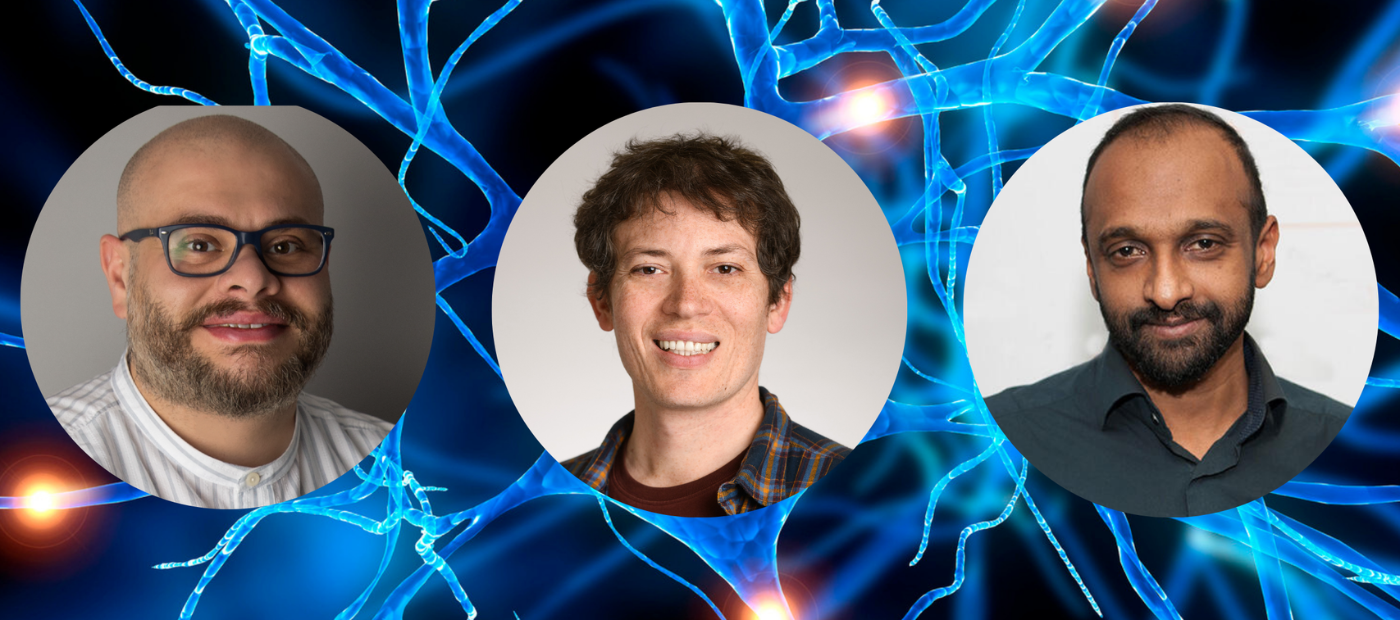
Twenty teams have been awarded Discovery Awards, two of which (Project MinE and ALS Precision Discovery Consortium) are led by researchers at King’s College London. A third team is led by AI biology company, Prima Mente, in collaboration with Dr Jemeen Sreedharan, Wellcome Trust Senior Research Fellow, King’s College London.
In 2027, ten teams will progress to a second stage, receiving a further £200,000 to build the evidence base for their proposed therapeutic targets in silico and in the lab. In 2028, five teams will then receive £500,000 to undertake validation of the highest potential identified targets in the wet lab.
The winning team will be announced in early 2031 and will be awarded £1 million for identifying and validating the target with the strongest evidence of therapeutic potential.
The three teams
Project MinE
Project MinE is the world’s largest ALS genetics consortium, co-founded by researchers at King’s College London. It is funded by the Ice Bucket Challenge, and through collaborations with ALS advocates United to End MND, as well as the UK Human Functional Genomics Initiative, the UK MND Research Institute, and the Centre for Precision Biomarker Translation (CPBT).
The consortium comprises four internationally recognised laboratories combined with the AI and computational biology expertise of Oxford PharmaGenesis and the global DEMON Network for AI in brain health, provide complementary strengths in computational genomics, epigenetics, molecular neuroscience, large-scale data science, and translational AI.
What makes our approach unique is its focus on how ALS may affect men and women differently. Most large studies analyse both sexes together, which can hide important biological clues; by studying these differences directly, we aim to identify new treatment targets and enable more precise therapies for ALS.
Dr Ahmad Al KhleifatSenior Research Fellow in Neuroscience, Member of Motor Neuron Disease Theme in NIHR Maudsley BRC
ALS Precision Discovery Consortium
The ALS Precision Discovery Consortium brings together world-leading ALS researchers, AI scientists, and drug discovery experts to use a completely new combination of multimodal patient modelling and perturbation-based target discovery. The consortium aims to use these methods to identify hidden ALS subtypes and the biological changes driving them.
The team plans to use computational models to simulate how the disease “pushes” cells away from a healthy state to pinpoint the genes and pathways driving this shift. Ultimately, this will facilitate discovery of more precise drug targets and accelerate personalised treatments for ALS.
The Longitude Prize on ALS gives us a unique opportunity to pursue bold, high-risk, high-reward science that traditional funding schemes rarely support. It allows us to combine cutting-edge AI, multi-omics, and perturbation modelling in ways that could fundamentally transform how therapeutic targets are discovered in ALS.
Professor Alfredo IacoangeliProfessor of Bioinformatics and Artificial Intelligence for Genomic Medicine, Deputy Lead of Motor Neuron Disease Theme in NIHR Maudsley BRC
Prima Mente
Prima Mente is an AI biology company building multimodal biological foundation models that learn simultaneously across genomics, epigenomics, transcriptomics, and proteomics. The company’s mission is to uncover the biological mechanisms driving complex diseases.
Unlike approaches that analyse a single data type at a time, Prima Mente’s models are designed to identify underlying disease mechanisms that only become visible when multiple layers of biological data are integrated together. A core strength of their approach is the ability to simulate what drives a cell from a healthy to a diseased state and, crucially, identify which genes to target to reverse that transition and restore normal function.
Prima Mente is excited to deepen its ALS research by leveraging the datasets provided through this Prize, complemented by novel patient samples. With the capacity to experimentally validate hypotheses in its in-house wet lab in London, Prima Mente is creating a fully integrated pipeline from data to validated drug targets.
“At Prima Mente we’re applying the same AI scaling principles that have transformed fields like protein folding and autonomous driving to the complexity of ALS biology. We believe that by integrating multiple layers of biological data, we can identify therapeutic targets that conventional approaches cannot. Prima Mente’s models combined with Dr Sreedharan’s deep ALS expertise means we can move from data to credible drug targets faster than has ever been possible.” — Hayley Holt, Director of Clinical Operations and Research Partnerships, Prima Mente.
Dr Jemeen Sreedharan, Wellcome Trust Senior Research Fellow at King’s College London, will help with translation into the clinic.
I'm really looking forward to this partnership with Prima Mente. As a clinician with wet lab experience it will be exciting to team up with a group that specialises in computational approaches. In this way I hope we can make significance progress towards identifying credible targets to treat ALS
Dr Jemeen SreedharanWellcome Trust Senior Research Fellow at King’s College London