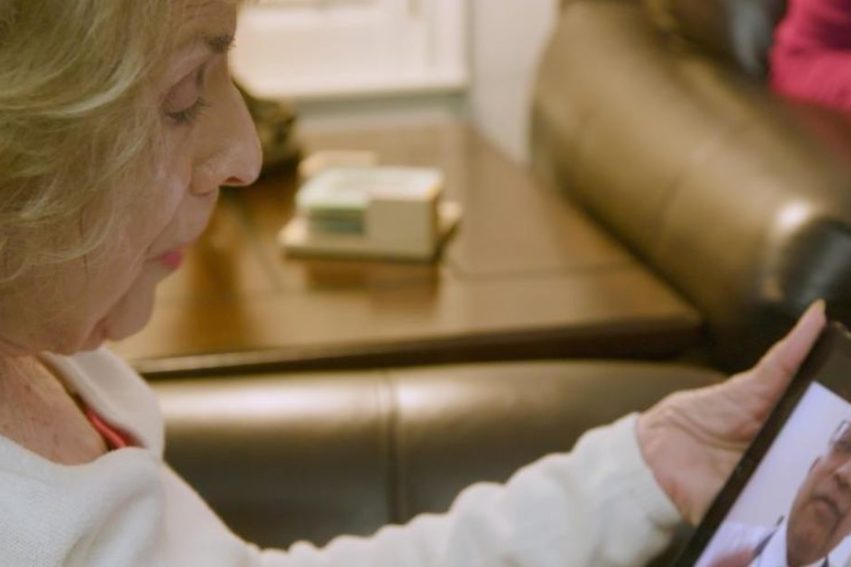


A new study from researchers at King’s College London and South London and Maudsley NHS Foundation Trust suggests that remote psychiatric care is working well for many patients, but may not suit everyone.
Published in npj Digital Medicine, the research analysed over 100,000 patient records collected over five years. It looked at how the shift to phone and video appointments has affected outcomes across a wide range of mental health conditions.
What the study found
Overall, the findings suggest greater use of remote consultations was not linked to worse outcomes for most people using mental health services.
Professor Robert Stewart, Professor of Psychiatric Epidemiology at King’s College London and Deputy theme lead, Informatics said:
“For many patients, remote care as currently delivered, appears to be a safe and effective way of delivering support. It offers flexibility and can make it easier for people to stay engaged with services, although our findings might also be explained by services choosing to deliver remote care where it will work best.”
This adds to growing evidence that remote care can play an effective role in routine treatment, particularly for ongoing support.
For people with schizophrenia and related conditions, higher levels of remote care were associated with a small increase in hospital admissions and emergency assessments.
Liliana Hidalgo-Padilla, lead author of the study, and a UKRI PhD student, at the Institute of Psychiatry, Psychology & Neuroscience (IOPPN) at King’s College London, said:
“Our findings suggest that remote care is not a universal solution. Some people, particularly those with more complex needs, may benefit from more regular face to face contact.”
This suggests that some patients may still need more in-person support as part of their care. The move to remote care has been one of the biggest changes in mental health services in recent years. This study helps build a clearer understanding of what is working, and where services may need to adapt.
“The key now is to find the right balance,” added Professor Stewart, a Consultant Old Age Psychiatrist at South London and Maudsley NHS Foundation Trust. “A more flexible approach, where remote and in-person care are combined, is likely to provide the best outcomes.”
The findings point towards more tailored models of care, where different types of support are used depending on individual needs.
Dr Mariana Pinto da Costa, Research Inclusion Champion at our BRC, Reader at the IoPPN at King’s, Consultant Psychiatrist at South London and Maudsley NHS Foundation Trust, and study senior author said,
“The rapid expansion of remote care has created new opportunities for many people to access support more conveniently and flexibly. However, mental health care should never be a one-size-fits-all model. By understanding which approaches work best for different individuals, we can build services that are more personalised, equitable and responsive to individual needs. Ultimately, the greatest promise of innovation is to ensure that every person receives the right care, in the right way, at the right time.”
The study was funded by a PhD studentship from the UKRI – Economic and Social Research Council London Interdisciplinary Social Science Doctoral Training Partnership (LISS-DTP ES/P000703/1) and the National Institute for Health and Care Biomedical Research Centre: Maudsley.
Useful links
Hidalgo-Padilla, L., Stewart, R., Broadbent, M. et al. Evaluating the shift in psychiatric care: Associations between remote consultation use and clinical outcomes in a large longitudinal cohort. npj Digit. Med. (2026). https://doi.org/10.1038/s41746-026-02922-w