The GLAD and EDGI studies are two of the largest observational studies in the world, with over 50,000 participants signed up across both studies to date. That’s 50,000 sharing their experiences of living with anxiety, depression and eating disorders, taking us a step closer to understanding who is most at risk and how best to support them.
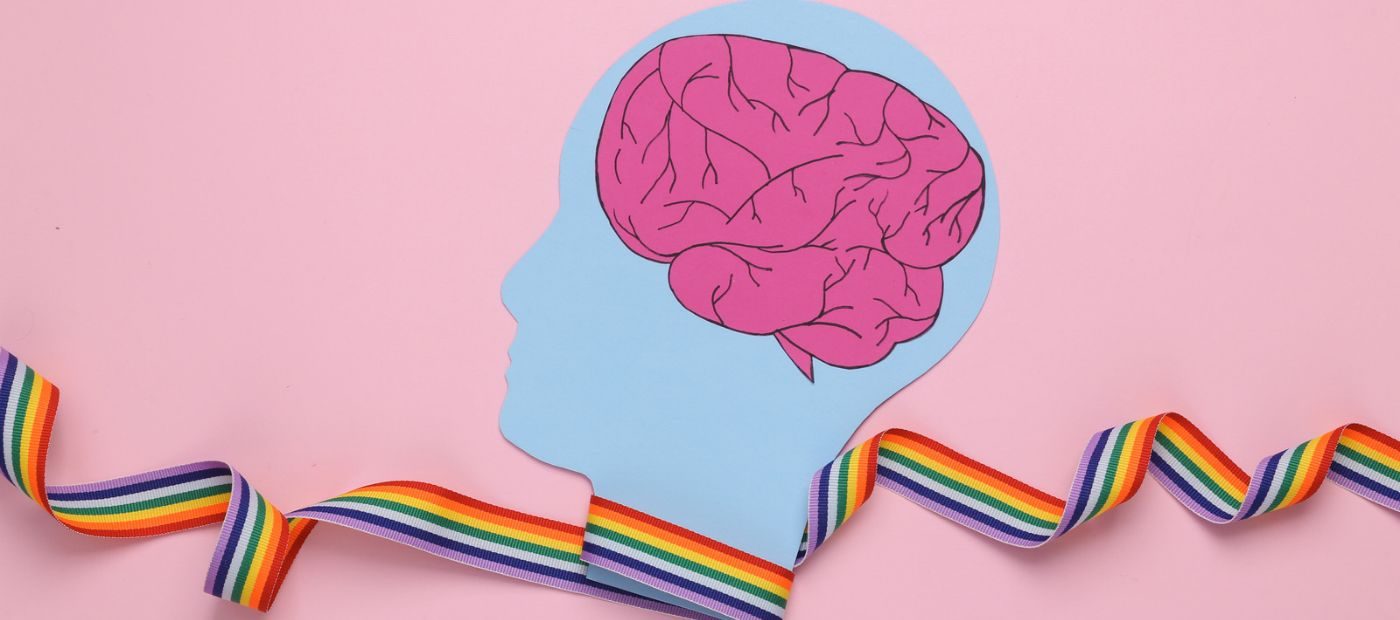
One group already identified as at risk of poor mental health is the LGBTQ+ community. Research shows LGBTQ+ people are more likely to experience depression, anxiety, and poor body image than their cisgender heterosexual peers. Joel Bates, Research Assistant at the NIHR BioResource explores in this blog that understanding why – and what protects against these outcomes – is more nuanced than it might first appear.
Exploring minority stress
Being LGBTQ+ can come with a chronic, background stress that cisgender heterosexual (cishet) people simply don’t face in the same way. This stress can lead people to question their own identity, internalise harmful or damaging ideas or hide or conceal part of themselves from society. This so-termed ‘minority stress’ has tangible consequences on mental health (Meyer, 1995).
Minority stress includes two forms of stressors. So called ‘distal stressors’ are external and take the form of discrimination, harassment, and prejudice. Meanwhile, ‘proximal stressors’ are internalised. These can be driven by distal stressors i.e.; external events of prejudice can lead to a proximal stressor in the form of internalised beliefs e.g., ‘I am bad’.
Importantly, these stressors can accumulate, and over time this ongoing stress can erode wellbeing. For example, higher minority stress is consistently linked to more depression, more body image concerns, and lower self-esteem.
The body image connection
One aspect of LGBTQ+ mental health that’s received less attention is appearance anxiety – how worried someone feels about how they look. We live in a society that transmits narrow, heavily binary ideas about how bodies should look.
LGBTQ+ people may feel pressure to conform to mainstream appearance ideals to “pass” /(to conceal their identity and avoid discrimination) – while simultaneously facing appearance pressures within LGBTQ+ communities. Navigating both sets of expectations may intensify appearance anxiety. For transgender individuals this may be particularly acute, with body dissatisfaction driven by both societal pressures and gender dysphoria.
This may lead an individual to become more conscious or anxious about their appearance. They may idealise unobtainable standards, resulting in increased likelihood of restrictive eating and/or depression when these behaviours lead to weight gain and/or when the unobtainable appearance standards are not met. This explains how social stressors can transfer from one domain to another. Social stressors regarding social acceptance can transfer to body image to eating behaviour to self-esteem to depression.
What protects against It? Body appreciation
One paper, (Bates, Maalin & Thornborrow, 2025) investigated how having a positive regard for, and appreciation of, your own body can have a protective effect against depression. Importantly, so-called ‘body appreciation’ isn’t simply the absence of body dissatisfaction. It is an active, positive relationship with one’s body: respecting it, valuing it, treating it with care rather than hostility. Research indicated that LGBTQ+ people with higher body appreciation may be better protected against depression driven by minority stress – with body appreciation acting as a psychological buffer. The study found that when body appreciation is high, depressive symptoms decrease even as minority stress increases. Importantly, this work only looked at one group at one point in time, and as such cannot prove causation, however, it does position researchers at GLAD and EDGI to investigate further.
This issue has direct implications for clinical support as it highlights the value of targeting body appreciation to protect against poor mental health outcomes.
Why should LGBTQ+ people take part in research?
Much of what we know about LGBTQ+ mental health comes from research that has historically overlooked this community or flattened its diversity by treating all LGBTQ+ people as interchangeable or homogenous. Those gaps have real consequences for the quality of support available. Researchers at EDGI and GLAD are striving to ensure that our survey captures the experiences of LGBTQ+ people so that we can better understand experiences and outcomes for this community.
If you’re part of the LGBTQ+ community and interested in contributing to mental health research, studies such as EDGI and GLAD are actively seeking participants from all backgrounds and identities. Your experience helps build the picture that advocates, clinicians, and researchers need to make the case for better, more equitable care.
To find out more, and to sign up visit Eating Disorders Genetics Initiative | EDGI UK or at Genetic Links to Anxiety and Depression | GLAD Study.
Useful links
Further reading
- Want to know more about Minority Stress? Like all scientific explanations, the Minority Stress Model is a theory, and all theories come with challenges and critiques, read here to learn more about the evaluation and critique of Minority Stress.
References
- Bates, J., Maalin, N., & Thornborrow, T. (2025). Aspects of body image as moderators and mediators in the relationship between minority stress and depression among diverse LGBTQIA+ identities. Body Image, 55, 101975.
- Meyer, I. H. (1995). Minority stress and mental health in gay men. Journal of health and social behavior, 38-56.
Helpful Resources