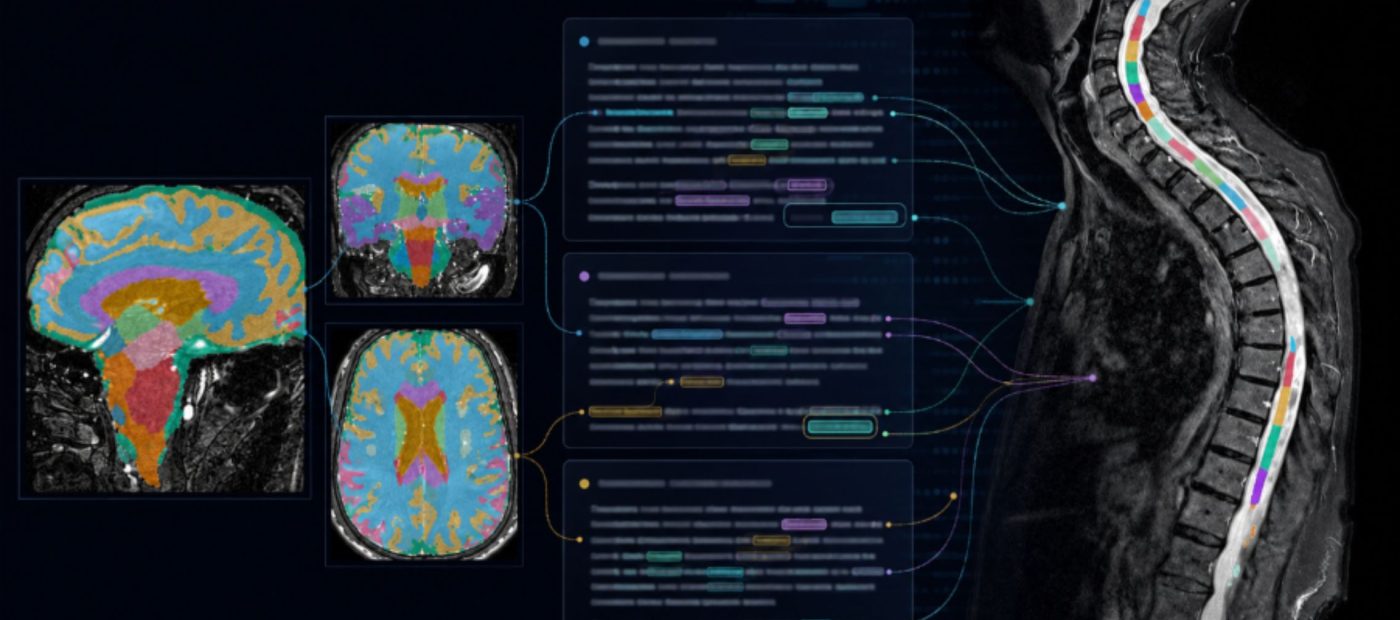
A new eight-year £2.72 million Wellcome-funded project aims to improve care for people with multiple sclerosis by using artificial intelligence to learn from information already collected in hospitals.
The Data-driven Representation Learning for Equitable, Personalised Care in Multiple Sclerosis (DreaMS) project will develop new AI tools to make better use of existing decades-long hospital information, rather than collecting expensive data for research.
More than three million people worldwide live with multiple sclerosis, or MS, a lifelong neurological condition. MS affects movement, vision, thinking, fatigue, and independence. A major challenge in MS care is that the condition affects people differently. Some people remain stable for many years, while others develop worsening disability. Understanding these differences earlier could help doctors make more personalised treatment decisions.
Hospitals already hold large amounts of useful information about people with MS, including brain and spinal cord MRI scans, radiology reports, doctors’ letters, nurses’ notes, and other clinical records. However, much of this information is difficult to use because it is stored as images or free-text documents rather than in a format that can be easily analysed.
Analysing routine hospital scans
One part of this project will focus on MRI scans. Software will be designed to analyse routine hospital scans, including older scans and those taken with different machines or methods. The aim is to measure signs of MS-related damage in the brain and spinal cord, such as lesions and tissue loss, and to track how these change over time.
A second part of the project will focus on clinical text. Secure AI models will be developed to identify important information from doctors’ letters, nurses’ notes, and radiology reports. These records often describe symptoms, relapses, walking ability, fatigue, cognition, treatment changes, and how MS affects daily life. DReaMS aims to turn this information into useful measures of disease progression.
The project will also bring scans and text together. By combining information from MRI images and clinical notes, the team aims to develop AI models that can help predict risk of future disability, identify different patterns of MS, support treatment decisions, and assist with MRI reporting.
International collaboration
DreaMS will involve 16 hospitals and research centres across four countries (in the UK, and in the Netherlands, Canada, and South Korea). Additionally, in collaboration with NIHR Biomedical Research Centre: Maudsley, the project will expand it to several other hospitals in South East England. Patient data will stay within each hospital. Instead of moving identifiable patient records between centres, the AI models will learn inside NHS and secure data environments from anonymised data and share only model updates. This approach is designed to protect privacy while allowing the models to learn from a large and diverse group of people with MS.
The project will be led by Dr Arman Eshaghi, who will join King’s College London from UCL in 2027 to establish the DreaMS Lab within the IoPPN’s Department of Biostatistics & Health Informatics.
The DreaMS Lab will develop open research tools for scientists and clinicians and lay the foundations for future decision-support systems that could help people with MS receive earlier, fairer, and more personalised care.
Dr Arman Eshaghi“For far too long we have exclusively relied on high-quality research data to understand diseases that rarely generalise to the clinic, where life-changing decisions are made with patients. Enormous amounts of hospital data that can revolutionise our understanding of neurological disorders go underused in the hospital. The key to curing many complex and poorly understood diseases, including MS, lies in this data - if we had the tools to analyse it. DreaMS will deliver those tools and tackle centuries-long questions about how MS progresses to eventually cure it one day.”
Professor Mark Richardson Paul Getty III Professor of Epilepsy and Head of School of Neuroscience at King's IoPPN“I am delighted to see Dr Eshaghi moving to King’s, to work with our exceptional electronic health records research infrastructure to improve outcomes for the large number of people living with MS.”
Dr James Teo Professor of Neurology at King’s College Hospital.“With the support of the Wellcome, Dr Eshaghi’s work will take forward the frontier of brain disease through combining the latest software and AI technologies with large scale patient data to develop better precision and personalised treatments for our patients,”
Patient and Public Involvement and Engagement (PPIE)
PPIE is a central component of the DreaMS project, ensuring that the research is shaped by the perspectives and priorities of people with lived experience of multiple sclerosis (MS). The project has already been co-designed with a Patient and Public Advisory Board comprising individuals living with MS and caregivers, whose input has directly influenced key aspects of the research, such as recognising the importance of including nursing notes to better reflect patient experience.
The PPIE Board will continue to play an active role throughout the project, meeting regularly to guide delivery, provide ethical oversight, and ensure transparency in how patient data is used. Members will also co-produce outputs, including accessible summaries, videos, and infographics, and support dissemination through networks such as MS societies. This ongoing partnership will help ensure that DreaMS remains relevant, inclusive, and focused on delivering meaningful improvements in care and outcomes for people with MS.