
Jason Grant-Rowles
Jason Grant-Rowles is a NIHR BRC: Maudsley PhD student. His PhD is focused on how to improve informed consent within schizophrenia research. His supervisors are Professors Til Wykes and Gareth Barker.
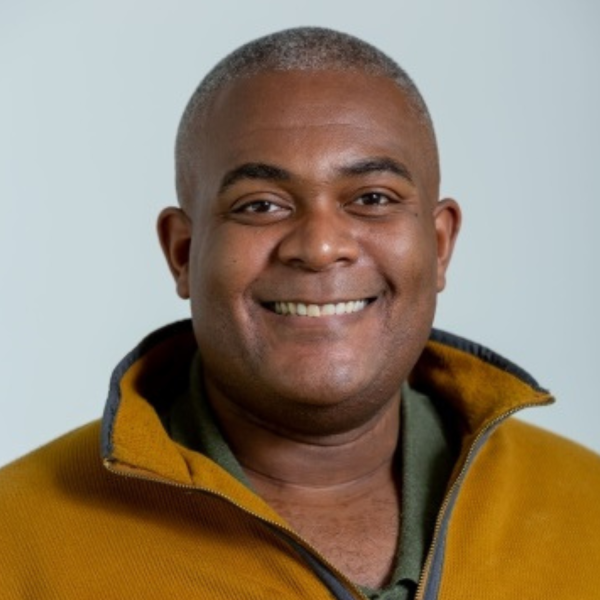
“I was inspired to do a PhD as I wanted to improve outcomes for others by developing expert research skills to continue to drive changes within patient and public involvement. Being at King’s enables me to learn from the best, and being embedded within the NIHR Maudsley BRC’s PPI group ensures that I am learning from likeminded folks.
I want to understand what gets in the way of people taking part in research. This matters to me as over the past ten years, people I have seen managing severe mental health conditions have usually been involved in research. I would like those currently being left behind to experience what research has to offer.
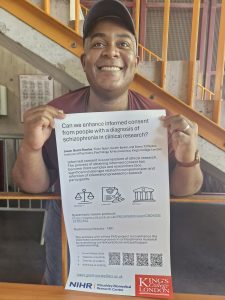
I have benefited from being involved in research as a participant. I then became an Expert by Experience for a Psychosis Research Group, where I offered my suggestions to researchers so they could improve their funding applications. I have been involved in many Lived Experience Advisory Groups over the years.
My formal academic posts include being a Research Associate at the University of Manchester investigating ethnic disparities within severe mental illness. I was a Lived Experience Advisory Group member for the RECOLLECT programme exploring Recovery Colleges at King’s and Nottingham. In addition, I was the PPI Lead for the Mental Health Implementation Programme implementing evidence based mental health interventions across underserved areas in England.
For me diversity in academia means being able to think for oneself, to ask questions, to make mistakes, to be curious, and to speak with people who may not be like me.
I hope to share my learnings with people directly impacted by schizophrenia. I also want to speak with mental health trusts and other academic institutions to find ways to meaningful improve informed consent across the system.
For me diversity in academia means being able to think for oneself, to ask questions, to make mistakes, to be curious, and to speak with people who may not be like me. If everyone thinks in the same way, then we will not be able to make progress on the mental health challenges society faces. The Psychology PhD student cohort is very international. Learning from colleagues from countries across the world allows me to be humble and become more open minded about the challenges facing people.
I’d advise people considering a PhD to speak to people who have done doctoral level research, find good mentors, networks, support, understand the funding landscape, make yourself known to people, and submit the application. Visit open days, go to events, conferences, and try to find development programmes. It is unlike any other formal qualifications that I have taken before. You need to manage time in a way to minimize the distractions, have a clear understanding of whatyou are doing, develop both personally and professionally, whilst managing your supervisors. It is certainly not for the faint hearted, but I am finding it extremely rewarding, in terms of having total control of my future trajectory in research. I completed the Mental Health for All programme at UCL which helped me to develop the confidence to apply for PhD programmes.
After my PhD I’m hoping to pursue a career in research and practice. I would like to do a post-doc in another country, where I can build on my knowledge, skills, and experience over the past ten years in the UK.
I’d like to see more kindness and compassion in academia towards difference. We are all unique and wonderful individuals who just need an opportunity to shine brightly!”