
Zara Rehman
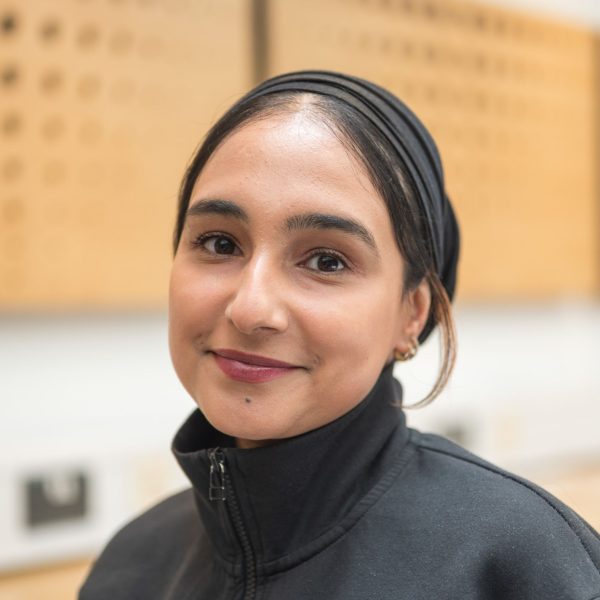
Zara Rehman is a NIHR BRC: Maudsley PhD student. Her PhD supervisors are Dr Whitney Scott and Dr Kirsty Bannister. Zara’s research is about understanding why people with Parkinson’s often experience chronic pain, and why that pain can feel so different from one person to another.
I was also inspired by the opportunity to work closely with, and be supervised by, leading pain researchers in the field, Dr Whitney Scott and Dr Kirsty Bannister. Their expertise and the BRC’s interdisciplinary culture make it an exceptional place to develop impactful, patient‑centred research.
My research is about understanding why people with Parkinson’s often experience chronic pain, and why that pain can feel so different from one person to another. Instead of looking at just one cause, I study pain from a holistic perspective – that means looking at the whole person: the body and how the nervous system processes pain, the mind, so thoughts, emotions, stress, and the social world, such as stigma and support.
To do this, I use two main tools: Sensory testing, which helps us understand how someone’s nervous system reacts to touch, temperature, or pressure and Ecological Momentary Assessment (EMA), a method where people answer short questions on their phone during the day so we can see how their pain changes in real life, moment to moment. By putting this information together, we can identify different patterns of pain and understand what might make it better or worse for each person.
My research is about more than data. It’s about helping people understand their own pain, finding targets for better treatments, and ultimately improving everyday life for those living with Parkinson’s... I want to contribute to research that not only advances clinical understanding but ultimately helps patients and their families make sense of what they are experiencing together.
Chronic pain in Parkinson’s is common, but it’s still poorly understood and often overlooked. I care about helping people with Parkinson’s feel heard. This is especially vital when their daily pain has a huge impact on their quality of life. My research is about more than data. It’s about helping people understand their own pain, finding targets for better treatments, and ultimately improving everyday life for those living with Parkinson’s. Pain in Parkinson’s is frequently underreported, under-recognised, and poorly understood, even by those closest to the patient. I want to contribute to research that not only advances clinical understanding but ultimately helps patients and their families make sense of what they are experiencing together.
To me, diversity in academia is about ensuring that the people who produce research reflect the people who will be impacted by it. When a wider range of perspectives is included—scientific, cultural, social—we’re better able to understand complex issues like chronic pain and develop solutions that genuinely meet people’s needs.
I’ve experienced moments in academia where I didn’t feel I fully belonged, and imposter syndrome often made me feel like I had to work twice as hard to prove myself. What has helped me navigate these challenges is having supervisors who create a safe, respectful environment where I can raise concerns and feel genuinely heard. Their support has made a huge difference and has reinforced how important inclusive, empathetic academic spaces are.
Navigating setbacks, building confidence, and finding my voice in academia has been a big part of my journey. I hope my research helps shift the field toward a more holistic, personalised approach to chronic pain in Parkinson’s.
I’m proud that I’ve stayed committed to my goals even when things felt difficult or intimidating. Navigating setbacks, building confidence, and finding my voice in academia has been a big part of my journey. I hope my research helps shift the field toward a more holistic, personalised approach to chronic pain in Parkinson’s. By uncovering the different factors that shape pain day‑to‑day, I want to support better treatments and help people feel more understood and better supported.
A PhD is tough at times, so feeling valued and backed by your team makes all the difference. It is important to choose a topic you’re passionate about and make sure you have supervisors who will support and guide you.
After my PhD, I hope to continue in academic research, ideally through a postdoctoral position where I can build on my work in chronic pain in Parkinson’s and develop a more independent research profile.
Inclusion starts with making sure everyone feels safe, respected, and able to access the same opportunities.
Longer term, I am drawn to the intersection of research and health policy — particularly in how evidence about underrecognised symptoms can be translated into better guidance for clinicians, patients, and families. My interest in this space is not purely academic. Growing up in a family where a serious illness went unnamed and unexplained for years, I saw first-hand how the gap between clinical knowledge and community understanding can shape a family’s experience of illness. I want my research to contribute not just to the literature, but to the kind of practical, communicable knowledge that reaches patients and the people who care for them. Ultimately, I hope to be someone who bridges those worlds — producing rigorous research while also engaging with the policy and public health conversations that determine how that research gets used.
I’d like to see more consistency in how people are treated and a stronger emphasis on creating genuinely supportive environments. Inclusion starts with making sure everyone feels safe, respected, and able to access the same opportunities. I’ve been lucky to have Dr Whitney Scott and Dr Kirsty Bannister as my PhD supervisors. They’ve supported me fully, cared about me beyond just the research, and always encouraged my independence. Seeing their passion and genuine care for people and the science is truly inspiring, and it reminds me that there are people in academia who want others to thrive. Their support has made a huge difference to my confidence and overall experience.