
Our PPIE strategy for 2022-28
Our strategy outlines how we are bringing people, patients, carers and experts by experience into our research.
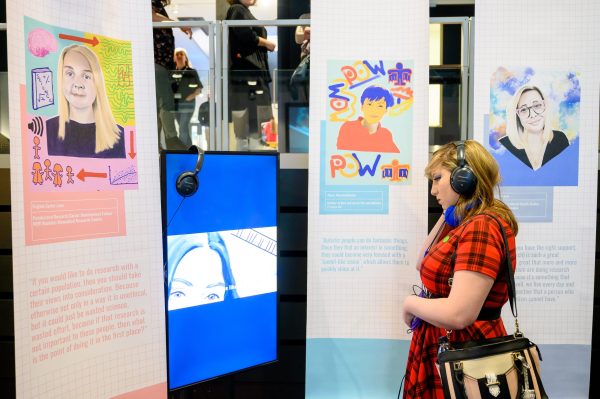
Our strategy connects people, patients and carers with our research in a meaningful and inclusive way, so that opportunities to become involved in research at every level are visible to the public, especially people with lived experience of mental health.
Download a PDF version of the full strategy here
Download a one-page summary of the strategy here
Our Strategy will be a success if we:
- Increase awareness of our research to people with lived experience, their carers, and the public
- Increase capacity for service user led and co-developed research, as well as service user and carer advice that changes research
- Provide suitable advice to researchers that is helpful for developing protocols and patient-facing documents
- Increase the number of studies involving service users at every stage of the research process
Purpose, aims and objectives
Vision
The National Institute for Health and Care Research (NIHR) Maudsley Biomedical Research Centre (BRC) hosted at South London and Maudsley NHS Foundation Trust in partnership with King’s College London develops and supports infrastructure to improve research in mental health and neurological conditions.
Our Patient and Public Involvement and Engagement (PPIE) strategy connects people, patients, and carers with our research in a meaningful and inclusive way, so that opportunities to become involved in research at every level are visible to the public, especially mental health service users.
We involve service users in our research at all stages since their experience is an essential and valuable source of knowledge, and a necessary part of high-quality research. This means service users are involved in:
- setting research agendas,
- overseeing projects and programmes,
- and disseminating research.
This includes supporting research by expert researchers with experience of using mental health services (service user researchers).
We aim to ensure that our research is relevant to stakeholders, including patients, their supporters, and clinical staff. Patients are embedded into the management and governance of our work. We also strive to be an example to other researchers and clinicians to demonstrate what it is possible to achieve as well as the benefits that PPIE brings to research and clinical practice.
Our strategy follows from our previous work developed from our earliest BRC, building trust, influence, and representation amongst patients and public.
Objectives
We will:
- continue to develop links to local community groups e.g., the Dragon Café, Pint of Science, and continue our partnerships in the UK (e.g. The McPin Foundation) and USA (OneMind Psyberguide),
- work with other BRCs to support PPIE as well as to carry out research with a strong PPIE component,
- continue to support service user and carer advisory groups that can offer lived experience views to be incorporated into research programmes,
- continue to develop novel user-led research methods such as multi-criterion modelling that will bring the user voice into research,
- develop expert user involvement in the research themes.
These types of involvement will be embedded throughout the BRC.
We continue to engage with all UK Standards for Public Involvement (Faulkner, 2015).
We offer inclusive opportunities to participate in our openly advertised research and advisory groups. We involve service users early in research via five advisory groups.
We promote and support learning opportunities and confidence in collaboration through our co-produced research skills training for service users, carers, and NHS staff within the South London and Maudsley (SLaM) Recovery College to overcome barriers of confidence and understanding so they can participate in our work. We also provide opportunities for those with lived experience to undertake PhDs to increase the capacity of our workforce to support PPIE.
Success Indicators:
Our Strategy will be a success if we:
- increase awareness of our research to people with lived experience, their carers, and the public by tracking the hits to our BRC website and working towards expanding this number, increasing C4C use by researchers and producing six media articles each year covering our BRC research outputs.
- increase capacity for service user led and co-developed research as well as service user and carer advice that changes research. This will be achieved by developing research theme and research project specific expertise through steering and advisory committees and PhDs undertaken by people with lived experience,
- provide suitable advice to researchers that is helpful for developing protocols and patient-facing documents, with acknowledgements of this advice in peer reviewed research publications
- increase the number of studies involving service users at every stage of the research process including having service users as authors of the final publication and doubling the number of those publications each year.
We have a commitment to plain language and try to be jargon free. If you find something in this document which you find hard to understand, please let us know.
Our PPIE is flexible to external demands and takes advantage of opportunities in the research field that people with lived experience feel strongly about. For instance, in the last BRC we carried out studies on views of ketamine with the NIHR Oxford BRC in order to support mechanisms of introduction of the drug into the NHS. We will continue to take advantage of these opportunities as they arise but have also produced milestones for our success indicators in order to track our progress (see Table 1 at the end of this page).
Scope
This strategy outlines how we approach service user and public involvement.
We want to involve people in shaping the direction of our research and the infrastructure we need to develop.
For the purposes of this document, we use the following definition of public involvement in research will be used, which is, “research being carried out with or by members of the public rather than to, about or for them.”
We believe that sometimes engagement can lead into involvement, since people often need to be aware of research before becoming involved.
Partners and Collaborators in the development of this strategy
Our strategy is informed by discussions with other BRCs and the National Institute for Health and Care Research (NIHR). We have consulted with academics and clinicians within our BRC, and importantly our service users and carers/supporters who have been involved with the BRC through our advisory groups.
Our external collaborations include other universities, UK and international charities (e.g., The McPin Foundation, OneMind Psyberguide) as well as locally for engagement and dissemination (e.g., Dragon Café, Black Thrive Lambeth).
In 2019/2020, before our application for the current BRC, we held five workshops with academics, service users and carers/supporters so we could get their understanding and priorities for research. In addition to a general meeting between the Service User Advisory Group ( SUAG) and the BRC Director we wanted to ensure that they could influence the future direction of research in our BRC through setting priorities.
These workshops focussed on scientific topics (Digital Therapeutics, Prevention, Improving clinical trials, Clinical Neuroscience/Sleep, Transdiagnostic measurement for precision psychiatry) as well as the overarching mission of this BRC. In addition to questions and discussion with service user members we also included at every workshop a section for service user members to comment on the potential work described and whether some of it was a priority for them. There were occasions when these comments affected our prioritisation. The whole of this work guided the funding application for this round of the Maudsley BRC. We have evidence that service users influence BRC research (e.g., Adanijo, et al.,2021; Jilka et al., 2021; Robotham et al., 2016).
We have written this document with reference to the ‘4Pi’ framework, adhering to the Principles, Purpose, Presence, Process, and Impact (National Survivor User Network; Faulkner, 2015) of involvement activity on our BRC and have highlighted where our activities adhere to this framework. We are further supported by our Public Engagement Champion, Professor Sally Marlow an experienced broadcaster, and our ED&I Champion, Dr Mariana Pinto da Costa.
Programme of Activities and Research
Service User and Public Participation is one of three central themes of our BRC. Our theme provides input into the BRC in seven main ways, which you can explore below.
Our research and our reflection and evaluation activities are conducted by people with lived experience of mental health problems and our reflections are also led by service user researchers
1. Strategic Oversight
Service users have been involved in developing BRC strategy, future direction, and the funding application.
This has occurred in the following ways:
- Setting priorities – We have carried out two priority setting exercises previously and we updated the last exercise (Robotham et al, 2016) for the current BRC through workshops that shaped the strategy. Service users and carers as well as clinical academics, clinicians, and service directors attended the workshops. In addition, we published an ethnography on the development of PPIE in our BRC led by service users that set the tone and identified the gaps in our PPIE (Evans and Papoulias, 2020). All this information benefited our substantive research priorities and our strategy for PPIE.
- The BRC website was developed and now includes links to a range of opportunities for taking part in research. This includes a platform listing IoPPN studies open to service users and the public locally, hosted on South London and Maudsley’s website, called ‘Take Part in Research’ a new research studies portal within the website (launched in 2023). Our website, and partner sites, allow patients and the public to connect with research through information on
(i) how to take part in research,
(ii) how to help shape research,
(iii) opportunities for young people,
(iv) support for researchers,
(v) community links.
We have also included an example of collaborative working with autistic individuals and scientists to set a research agenda to support clinician and researcher understanding of how to do this. Service users provided input on how they would like to read the site as well as its content. We regularly review this with our advisory board.
- All strategy meetings and workshops include service user representatives from our advisory groups. Other themes will include service users in developing a more refined strategy as their projects develop.
- Leadership of the CRIS system (Clinical Records Interactive Search) comes from a committee with a service user chairing the oversight committee. This is an important committee allowing researcher to access anonymised data from the medical records.
- Service users are an integral part of internal BRC funding processes, for example, sitting on panels for the selection of training and preparatory fellowships, as well as judging any award schemes for patient and public involvement.
- We have built relationships and now support local service user-led organisations through their evaluation strategies as these arise for instance with the Dragon Cafe.
- Service users are part of our BRC governance with service user representatives at all levels and with input from our Service User Advisory Group (see below) as needed.
2. Supporting research through providing resources
Advisory Groups
Our advisory groups’ diversity and community representation is monitored and enhanced with purposive recruitment (e.g., Black Thrive Lambeth).
Our BRC PPIE co-ordinator is the named lead to signpost enquiries to appropriate resources.
Approximately 75 service users and carers are members of our advisory groups, and they are available to comment on BRC strategy and research proposals. We monitor the diversity of the groups and strive to have community representation, across ethnicity, age, sex, and gender identity. All our advisory group members are compensated for their time and expenses.
We will continue to evaluate the impact of the BRC Advisory groups, informed by researcher feedback, to ensure they are fit for purpose and fulfil their objective. We will continue to establish novel co-production methods for developing outcome measures and research designs that can be used across BRCs and the wider research community.
- Service User Advisory Group (SUAG) meets six times a year and can be consulted on research ideas, design, scope, and methodology.
- Young People’s Mental Health Advisory Group (aged up to 26 years) meets approximately every three months and is consulted about research that has a focus on issues affecting young people. This group is available nationally and provides advice on how to set up local groups.
- Adolescent Mental Health Advisory Group (aged up to 17) is for younger people who meet in the school holidays and provide advice on research that is relevant to children and adolescents.
- ‘Fast-R’ service allows researchers to gain feedback on proposals, as well as information sheets, consent forms or other participant facing documents. Researchers can submit their work virtually and receive feedback within seven days.
- Data Linkage Service User and Carer Advisory Group is a group of people with an interest in data linkage (which means the joining of independent databases such as GP and hospital records). They meet regularly to provide feedback and advice to researchers.
Read more about our advisory groups on our website here.Advisory Groups
Training
To increase capacity we have co-produced basic research methodology and skills training for service users, carers and staff within the SLaM Recovery College as well as providing PPIE training materials for service users and carers, and ‘how to’ guides to assist with remote working, with service user input. These are also available for researchers who are building their PPIE and research remotely.
PPI Advisory Service
Service user researchers from the Service User Research Enterprise (SURE) are available to provide 1:1 advice for researchers on all aspects of research, including helping them with involvement. These service user researchers are part of our PPIE theme and are developing a PPI Advisory Service for researchers on how to develop PPIE for their proposals.
PPIE resources
In addition to these specific groups, we have also, for the first time, incorporated PPIE resources to cover the payment of lived experience advisors. These resources are available in all the research themes so that each of them can develop diagnosis or method specific PPIE for their studies. This will help the research themes to develop research studies that are feasible and more likely to answer the right questions with the right methods. It will also increase the capacity for PPIE across the BRC with this new, more devolved arrangement. These new research groups will be built as the BRC progresses.
In addition, we provide or will provide:
- Guidance (written in collaboration with service users) to help researchers involve lay members in steering committees for clinical trials and other projects together with new information on remote involvement developed during the pandemic.
- Lectures and training on service user involvement to postgraduate students as part of their Research Methods course and a third-year module for Psychology undergraduates is being built by people with lived experience in the Service User Research Enterprise that will be used for some of our postgraduate taught courses.
3. Leadership and Lines of Reporting
The PPIE theme had two co-leads (Professor Dame Til Wykes, Dr Angela Sweeney) from 2022 to 2025. There is currently a vacancy for a co-lead.
They are guided by a group of senior staff and a new service user lecturer who all represent different research skills and professional backgrounds including carers and nursing, as well as a commitment to service user involvement. Line management of research staff and projects is provided by The BRC project coordinator.
Strategic management
Resources have been allocated to all the work of the PPIE, including for:
- Payment of Advisory Group members including for any travel
- Staffing for the coordinator and the research support
- PPIE research and evaluation expenses
Resources are distributed from the BRC Core facility, but there are also resources in each Research Theme to ensure that there will be support locally. The management of all these resources is the responsibility of the BRC Director together with the BRC board and delegated to the Service User leads. Resources are reviewed annually with specific reference to PPIE resources within each Research Theme. All annual reviews will consider the output delivered from the PPIE resources wherever they are held, and this audit will consider whether they are meeting the NIHR and local BRC strategy for PPIE, whether they are being used to increase PPIE capacity.
Service user involvement in governance including all strategy meetings and workshops, the BRC Steering and Management groups is via the leads for involvement, especially the senior lecturer in service user led research, Dr Angela Sweeney. Service user researchers led and published an independent qualitative study that looked in detail of the process of involving service users across the years of BRC activity and specifically in the BRC’s governance (Evans and Papoulias, 2020). This study showed improvements in involvement across successive BRCs but still some gaps. A new proposed governance structure was accepted and is being implemented in 2023/24. Service user representatives regularly present at BRC Conferences and meet twice per year with the BRC Director to consider the whole programme of research. PPIE also pervades our governance through representation at the BRC Board and Theme levels and oversight of our informatics platforms.
4. Monitoring, reviewing, reporting and measuring
Key impacts:
- Review of the strategy objectives each year and the strategy review at three years.
- Diversity and inclusion in advisory groups will be monitored to ensure that it reflects the local community,
- Building the research capacity of service users by supporting lived experience PhDs
- Evaluations of all advisory groups – both researchers and members of the advisory groups (see below for details)
We have in the past measured our PPIE impact through an independent service user led qualitative study on the effectiveness of PPIE over the history of our BRC. This provided an overview of where we have done well and what more we need to do and provides a clear way forward (Evans and Papoulias, 2020).
Over the course of this BRC we plan to evaluate the minutes of advisory group meetings and carry out interviews of advisory group members to understand PPIE impact and whether service users feel their voice is being heard. This evaluation will be carried out by a lived experience researcher. Another study will take place which will involved interviews with employed lived experience researchers in order to determine best practice.
We will continue to investigate how service user advice changes the design and consent procedures (including readability) of studies and will publish our findings in peer reviewed journals.
We will also publish a simple plan on our website that details the steps involved in understanding impact and how strategies change following evaluation. This means that we move beyond impact to demonstrate how the results affect our future strategy as a full audit process. We also expect researchers who use our advisory groups to acknowledge that support in peer reviewed papers, to have a section on how lived experience was included in the study, and for researchers to encourage service users to be named as authors in the final scientific publication. Although this was curtailed during the pandemic, we intend to continue our face-to-face events with Dragon Café and ‘pubs’ (e.g., Pint of Science).
Examples of Impact
Previous impact: The Medication Side Effects measure (MSE; McCrone et al, 2021) has been developed and then embedded in Beth (a digital tool kit for mental health support).
Our FAST-R group makes an impact on the readability and understandability of research participant facing documents (Jilka et al., 2021).
Future impact: A systematic review of facilitators and barriers of PPI in mental health research with recommendations for future acknowledgement of lived experience within peer reviewed publications.
5. Conducting research
In the next five years we will:
- Monitor and support participation in BRC research especially the effects of PPIE in our Research Themes.
- Monitor and support our SLAM patient research volunteer list (Consent for Contact) and increase participation of under-represented groups (especially in relation to race and gender but where possible we will also monitor all protected characteristics).
- Explore digital health applications especially the acceptability of South London and Maudsley’s Beth app to support care-programming.
- Explore the acceptability of clinical data sharing for research purposes.
- Co-develop outcome and process measures for early-stage clinical trials.
- Continue evaluating advisory groups to discover their effectiveness. This will include investigations of the minutes of meetings, feedback from researchers and interviews with members of our advisory groups and service user researchers.
We will use mixed methods approaches including qualitative studies, surveys, psychometrics, discrete choice experiments and potentially clinical trials methods to assess new outcome measures. Outcomes include educational material for all BRCs and peer reviewed publications. Monitoring participation in these studies will mean we can respond to emerging problems such as decreased diversity in C4C.
Examples of service user-led (the lead for a project has lived experience of mental health difficulties) and PPIE involvement research
Current research underway:
- A qualitative study exploring why women and Asian men say no to registering on Consent for Contact register.
- A qualitative study investigating the experiences of service users and clinicians who have or have not used Beth which is a digital toolkit for mental health support.
- A multi-criterion decision modelling (MCDM) study, to understand the importance of relevant but distinct outcomes of interest for measuring treatment benefit for cognitive remediation therapy, from the point of view of service users and clinicians.
- An investigation of mental health service users’ views on the acceptability of clinical data sharing amongst researchers
- Following on from the data sharing qualitative study investigating the acceptability of anonymisation, potential research benefit and data sharing, a discrete choice experiment (DCE) will be developed.
- A systematic review of evaluations of PPI involvement to assess models that have been successful and provide a blueprint for our BRC plans.
- A comparison of the models for PPIE involvement in different research themes to identify barriers and successful impact
6. Public engagement
Media and engagement activity
We contribute to public engagement within the BRC, as do all the themes. We have conducted activities to engage national and local publics with our research and with mental health and illness more broadly.
Nationally we have presented BRC work through several BBC broadcast documentaries such as BBC Radio 4’s Rethinking Anorexia Nervosa, and also contributed to the wider raising of awareness of mental ill health for example BBC Radio 3’s Scoring Mental Health which was co-produced with service users. These documentaries are often picked up as learning aides for professionals across disciplines, for example social workers, lawyers, health care professionals.
Our research also regularly reaches the public via print, radio and TV media such as our research on Misophonia reported in The Times, Daily Mail, Independent, The Guardian, Telegraph, BBC Radio 4: The World Tonight.
In 2017 Professor Dame Til Wykes co-designed and co-delivered the world’s largest mental health lesson which reached 400 13–18-year-olds, and was widely covered by the UK press. This was followed by successful youth engagement events (Million Minds) in Scotland, London, Manchester and Birmingham. We also have a strategy of actively collaborating to produce content for online platforms, such as this story (one of many) on air pollution.
The Conversation has published a number of articles on our research, for instance on psychedlic drug research and the factors that predict the risk of self harm in children and for Mental Elf we provide blogs, e.g. exploring the challenges of sharing mental health data, as well as our research receiving blogs.
Locally we have a call for our researchers to apply for funding to increase the reach of their work into local communities, to improve engagement with and participation in research.
Some of these projects were showcased at a BRC in the Community event held at Peckham Levels in November 2022. Building on the success of these initiatives we will again run a funding call and will hold further large public facing events to engage our local community with our research. These will be co-designed with service users and members of the public, to ensure we reach the maximum possible audiences.
We will also be looking to engage internationally, building on our existing relationships with the BBC to pitch, develop and present documentaries featuring our research for the BBC World Service, as well as the national stations and channels. This is supported by Professor Sally Marlow and our communications team who have a lot of experience in this arena.
7. Improving practice with reflection and evaluation
It is essential to have continuous improvement of our PPIE practices to ensure close involvement of service users in governance and research and to remain at the forefront of developments in the PPIE field. We will continue to follow the success implemented in our previous BRC and extend it. Our programme of work will:
- Include an annual online survey of our support infrastructure services (i.e., Fast-R, the SUAG, Young Persons group, Adolescent Group and the Digital support group).
- We will run an equivalent survey with service users and carers who have been involved in BRC projects and programmes, to map the benefits which people may get from being involved.
- We plan to evaluate the minutes of our SUAG and YMPHAG and interview members of the Advisory groups in years 2 and 3 of this BRC (see milestones)
- We will continue to collaborate with PPIE leads within other BRCs to share ideas, information and good practice as we did with the Oxford BRC.
- We will describe, compare, and contrast the PPIE models developed in each research theme. These models may be different depending on the participants group and the specific projects and more or less successful.